
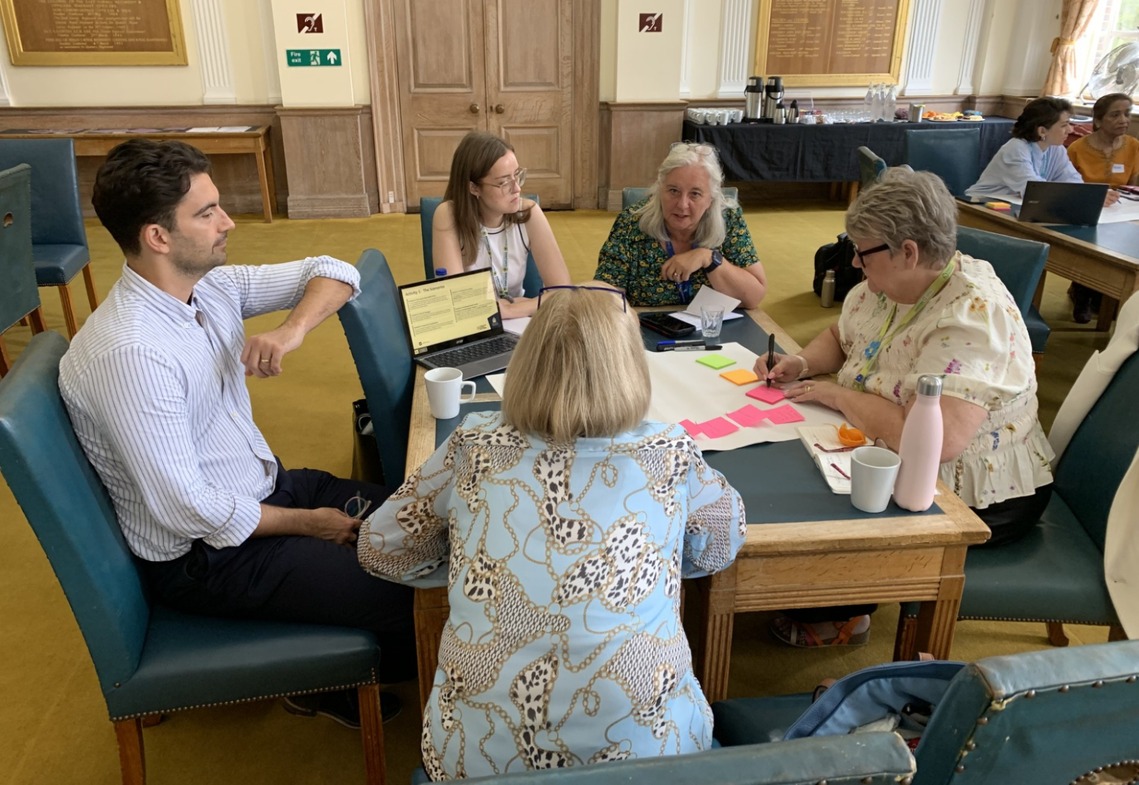
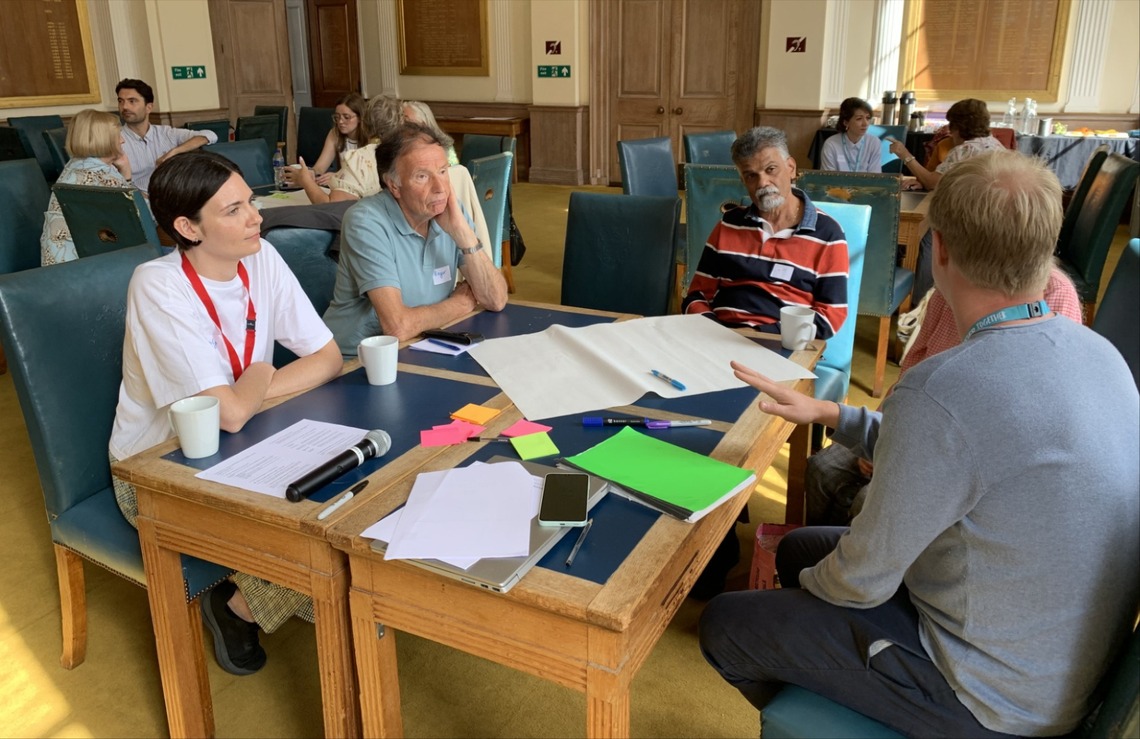
In Kingston, plans are still at an early stage, giving carers an important opportunity to help shape how they develop. The All Age Kingston Carers Board met at Kingston’s Guildhall on 15 September, for a workshop focused on ensuring carers’ needs are fully reflected.
The Board brings together unpaid carers and organisations across health, social care and the voluntary and community sector and is co-chaired by Kingston Carers Network and the Royal Borough of Kingston (RBK).
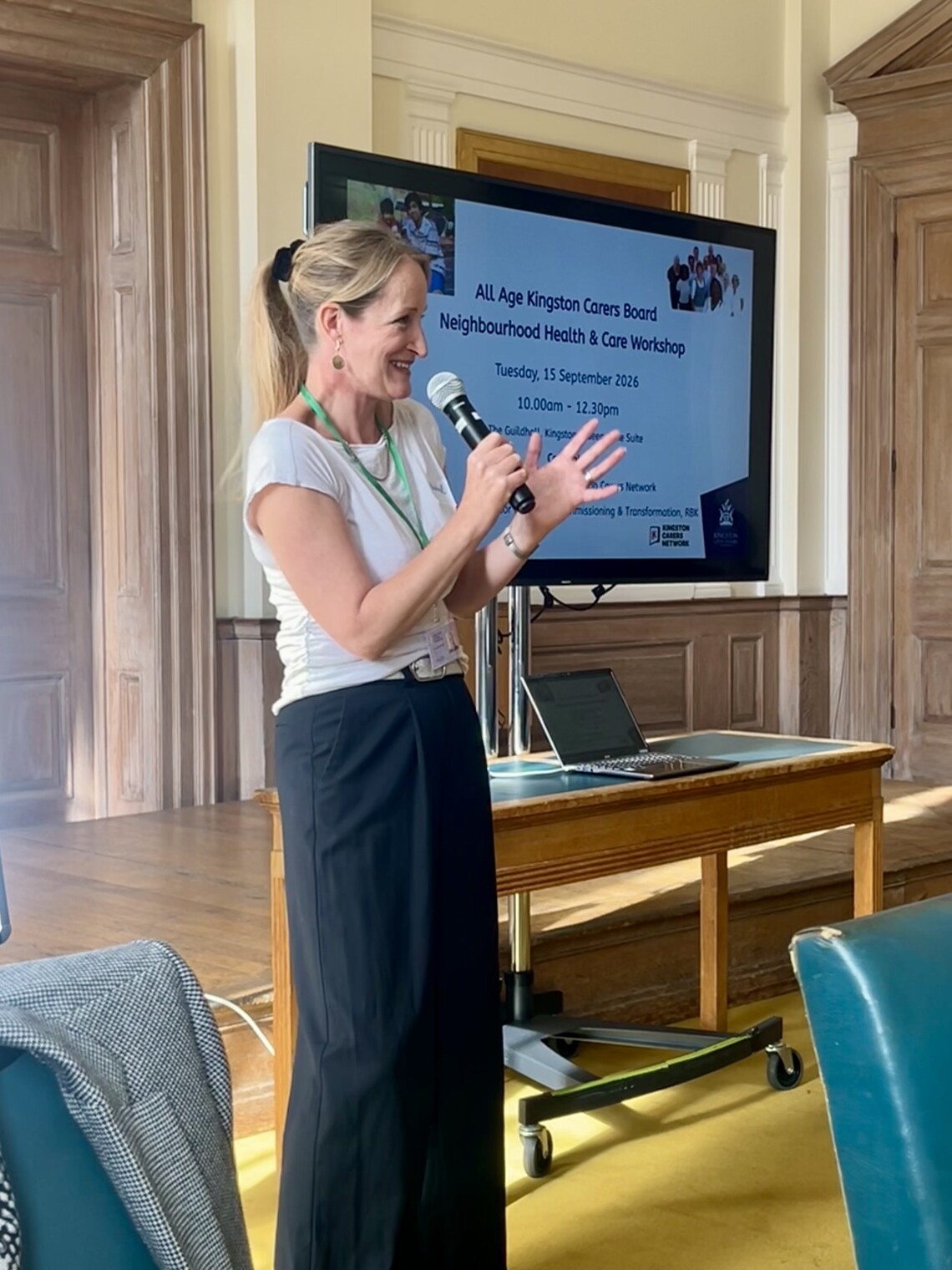
Opening the workshop, our CEO Rachael Stokes said:
“We think this presents some significant opportunities for carers to have their needs recognised and supported. It’s not going to be without its challenges, but we want to be at the forefront of that conversation.”
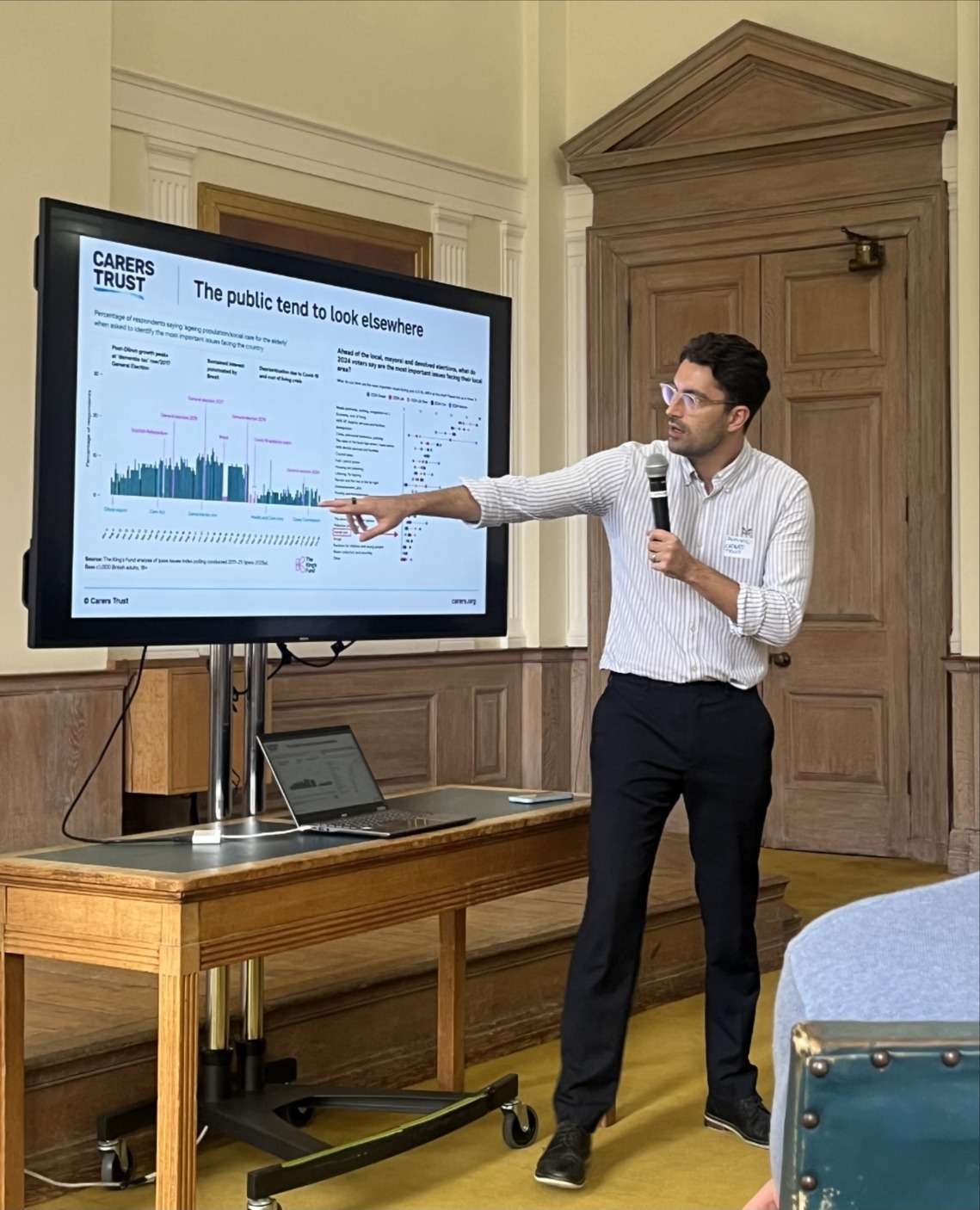
Dominic King-Carter, Director of Policy and Public Affairs at Carers Trust, set out the national picture, including the pressures already facing unpaid carers and the opportunities presented by the move towards neighbourhood health and care.
He stressed that carers must be supported by the system, rather than simply being seen as a resource that enables it to function.
“Carers are not there to be servants to the system. The system must be there to support carers.”
A key concern highlighted by Dominic was whether carers are sufficiently visible in emerging plans. Of 46 initial neighbourhood health plans examined by Carers Trust and NHS England, he told the workshop that only nine included unpaid carers.
Turning to Kingston, Sam Raffell, Director for People Commissioning & Transformation at RBK, explained that our borough is still at an early stage, giving local partners and residents an opportunity to influence what neighbourhood working looks like in practice.
He said the aim was for teams to work more closely together so that people get the right support and “don’t have to tell their story twice.”
Carers then explored what that should mean in their everyday lives, using real-life scenarios including looking after their own health, getting urgent support from a GP, coordinating long-term care, navigating social care and accessing carer breaks and respite.
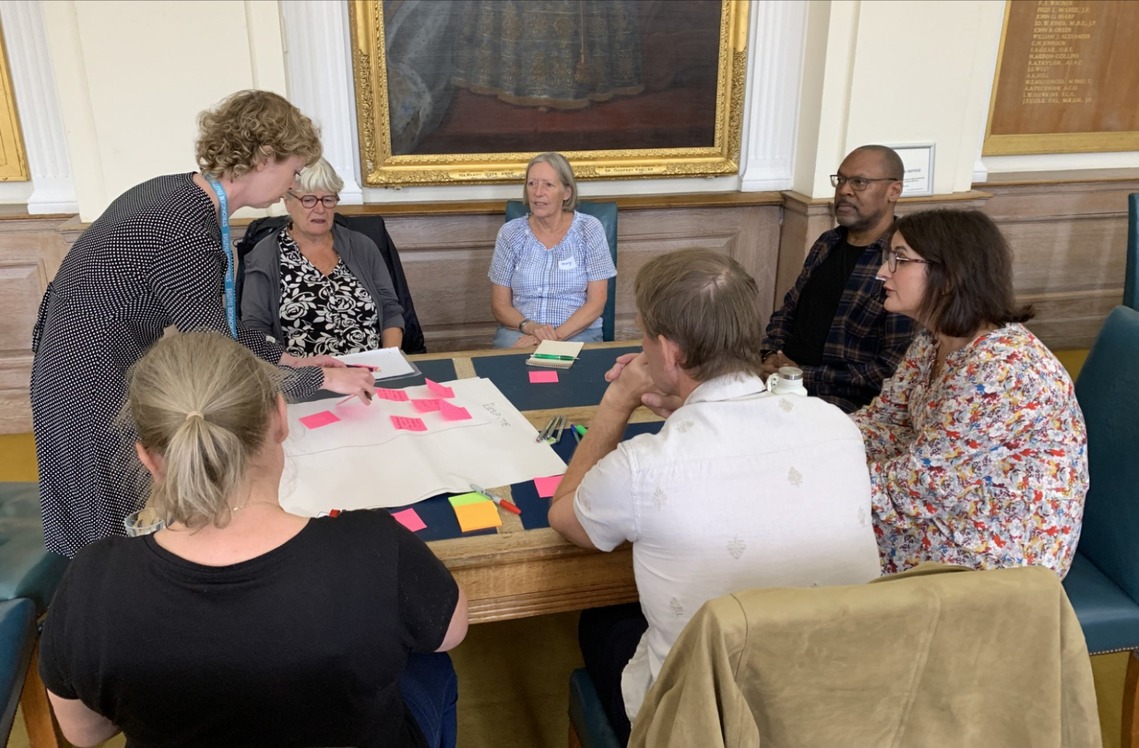
Initial themes from the discussions included better communication between services, clearer contact pathways, faster responses and less reliance on carers to act as the ‘fixer’ when different parts of the system do not join up.
Carers also emphasised the importance of being closely involved in designing Kingston’s approach and welcomed the opportunity to contribute to how it develops on an ongoing basis.
Feedback from the workshop will now be brought together to help inform the continuing development of Kingston's model and ensure carers’ experiences and priorities are part of the process. A more detailed briefing will follow.
If you’re not already subscribed, please sign up to our newsletter to receive the full briefing when it is published. You can view the Carers Trust neighbourhood health and care policy briefing here.